
Oregon
Oregon Sen. Merkley responds to court decision, says “Trump’s crusade against the ruling is steeped in racism” as SCOTUS delivers major ruling on citizenship
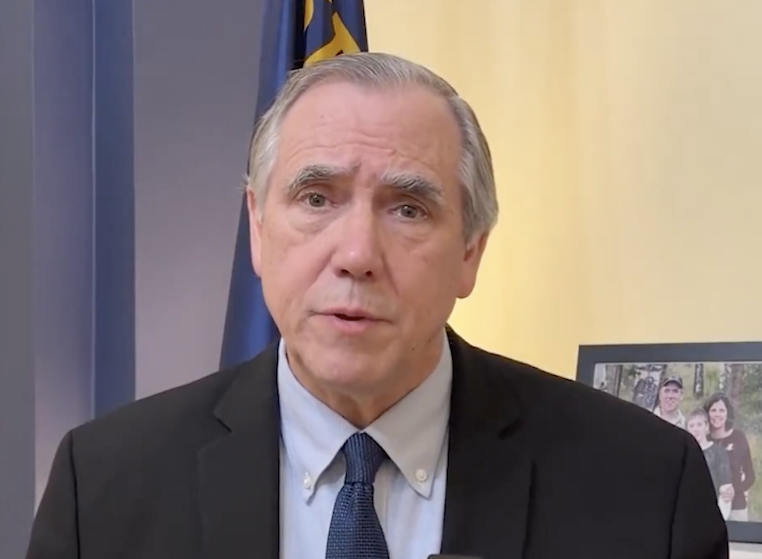
Oregon – Oregon Sen. Jeff Merkley praised a recent Supreme Court decision striking down proposed federal limits on citizenship policy, calling the ruling a victory for constitutional protections and established legal precedent.
“Trump’s crusade against birthright citizenship is steeped in racism, and his executive order was completely at odds with American law and precedent,” Merkley said in a statement shared on social media. “The Supreme Court delivered a decision today that upholds our Constitution and preserves fundamental rights.”
Merkley’s comments came shortly after the Supreme Court issued its ruling rejecting efforts tied to former President Donald Trump’s proposed restrictions on citizenship for children born in the United States to parents who are in the country illegally or temporarily.
According to reporting from The Associated Press, the Court upheld long-standing interpretations of the Constitution’s Citizenship Clause, reaffirming that individuals born on U.S. soil are generally entitled to citizenship under the Fourteenth Amendment. The decision effectively blocked attempts to impose new federal limits through executive action.
The case centered on legal challenges to an executive order issued during Trump’s presidency that sought to redefine eligibility for automatic citizenship at birth. The order argued that children born to non-citizens who are unlawfully or temporarily present in the United States should not automatically qualify for citizenship.
Lower courts had previously blocked enforcement of the policy, ruling that it conflicted with constitutional language and longstanding Supreme Court precedent. The high court’s decision ultimately upheld those rulings.
The Associated Press reported that the decision marks a significant reaffirmation of existing constitutional interpretation, maintaining that the Citizenship Clause has historically been understood to grant citizenship to nearly all individuals born within U.S. territory, regardless of parental immigration status.
Merkley, a longtime advocate for immigrant rights, framed the ruling as a defense of both constitutional law and civil rights protections. He also sharply criticized the political push behind the executive order, arguing that it represented a break from established legal norms.
The ruling immediately drew strong reactions from both sides of the political spectrum. Supporters of the decision argued that it preserves a foundational principle of American citizenship and prevents unilateral changes to constitutional interpretation through executive action. Critics, however, contend that the decision fails to address what they see as growing pressures on the immigration system.
The Supreme Court’s decision adds to a broader series of high-profile rulings involving immigration and executive authority, underscoring the continued legal and political debate over the limits of presidential power in shaping citizenship policy.
Legal analysts note that while the ruling resolves the immediate challenge to the executive order, broader political efforts to revisit citizenship laws are expected to continue in Congress and future administrations.
As the debate over immigration policy continues, Merkley’s statement signals ongoing opposition among Democratic lawmakers to efforts aimed at narrowing interpretations of constitutional citizenship protections.


Oregon gubernatorial candidate Drazan accuses Gov. Kotek of making homelessness “chronic and permanent” as governor says crisis “wasn’t created overnight and won’t be solved overnight”
Oregon – “Homelessness must be rare and temporary but under Tina Kotek’s failed leadership it’s chronic and permanent.” Oregon Republican...

Oregon Sen. Merkley says getting anything done in the Senate is like “wading through tar” as he joins Montana Republican Sen. Daines in proposing sweeping rules overhaul
Oregon – “Trying to get anything done in the Senate feels like wading through tar.” Oregon Sen. Jeff Merkley made...

Oregon Sen. Wyden takes aim at President Trump over diesel deal, says “he’s rewarding Putin with a windfall agreement that won’t even lower prices”
Oregon – Oregon Sen. Ron Wyden criticized President Donald Trump’s agreement with Russian President Vladimir Putin to supply diesel to...


Large fire involving palletized wood shavings breaks out at Coastal Farm & Ranch in Eugene, prompting early morning response from ESF
Eugene, OR – Eugene Springfield Fire (ESF) crews responded to a reported structure fire at Coastal Farm & Ranch in...


ESF crews work overnight to contain mill fire on Milliron Road as scene expected to remain active for days
Eugene, OR – Eugene Springfield Fire (ESF) crews worked overnight and into the morning as part of a countywide mutual...


Eugene woman arrested for DUII after allegedly speeding, swerving and refusing to exit vehicle, police say her blood alcohol level was .25%
Eugene, OR – The Eugene Police Department arrested a 33-year-old woman after an officer reportedly witnessed her speeding and swerving...

Oregon Sen. Jeff Merkley speaks out after Democrats block Republican stock trading bill, says ‘the bill Republicans are pushing is a sham’
Oregon – Sen. Jeff Merkley is calling for a complete ban on stock trading by members of Congress after the...

Senate candidate Drazan takes aim at Democrat opponent, says Gov. Kotek should ‘spend less time obsessing over Trump’ and more time fixing Oregon after heated debate
Oregon – Oregon state Sen. Christine Drazan is escalating her criticism of Gov. Tina Kotek, saying the Democratic governor should...

Elderly woman arrested for DUII after rear-ending vehicle, nearly crashing into victim again with little child in car before refusing to take a breath test
Eugene, OR – A 61-year-old Eugene grandmother was arrested for DUII Thursday evening after a crash and after police said...

Eugene man arrested after allegedly pistol-whipping unhoused man in the head, attacking another victim and leaving firearm in dumpster downtown
Eugene, OR – Eugene police arrested a 22-year-old man after he reportedly pistol-whipped an unhoused community member and was involved...
22-year-old woman arrested for DUII after driving over sidewalk, handing officer credit card instead of license and refusing to get into patrol car
Eugene, OR – A 22-year-old Eugene woman was arrested for DUII early Saturday morning after an officer reported seeing her...
-
Eugene1 week ago
Senate candidate Drazan takes aim at Democrat opponent, says Gov. Kotek should ‘spend less time obsessing over Trump’ and more time fixing Oregon after heated debate
-
Eugene1 week ago
Oregon Sen. Jeff Merkley speaks out after Democrats block Republican stock trading bill, says ‘the bill Republicans are pushing is a sham’
-
Eugene1 week ago
Elderly woman arrested for DUII after rear-ending vehicle, nearly crashing into victim again with little child in car before refusing to take a breath test
-
Eugene2 days ago
Oregon gubernatorial candidate Drazan accuses Gov. Kotek of making homelessness “chronic and permanent” as governor says crisis “wasn’t created overnight and won’t be solved overnight”
-
Eugene2 days ago
Oregon Sen. Merkley says getting anything done in the Senate is like “wading through tar” as he joins Montana Republican Sen. Daines in proposing sweeping rules overhaul
-
Eugene2 days ago
Large fire involving palletized wood shavings breaks out at Coastal Farm & Ranch in Eugene, prompting early morning response from ESF
-
Eugene1 week ago
Eugene man arrested after allegedly pistol-whipping unhoused man in the head, attacking another victim and leaving firearm in dumpster downtown
-
Eugene1 week ago
22-year-old woman arrested for DUII after driving over sidewalk, handing officer credit card instead of license and refusing to get into patrol car