
Oregon
Oregon Sen. Jeff Merkley reacts to new Trump admin rule he says could “make it harder for critical workers to get graduate degrees”
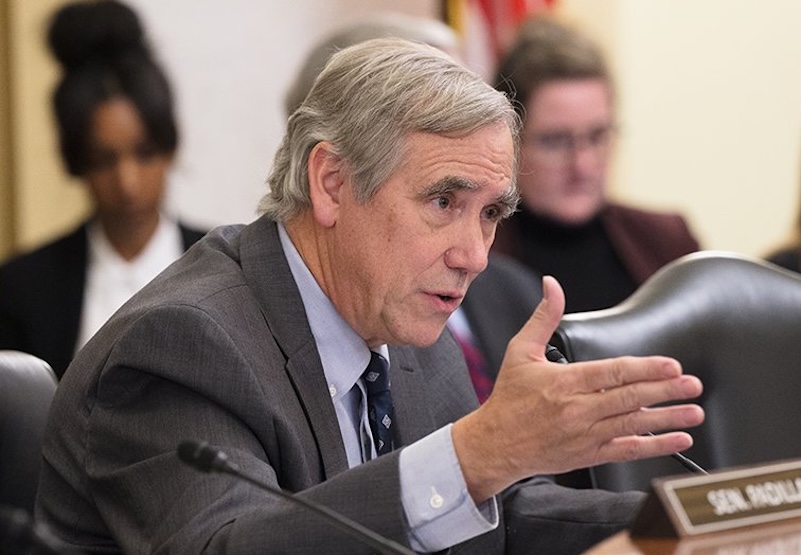
Oregon – Oregon Senator Jeff Merkley has sharply criticized a new Trump administration student loan rule, warning that it will make it harder for students entering essential professions such as nursing, teaching, counseling, and social work to obtain graduate degrees at a time when the United States is already facing workforce shortages in those fields.
“A new Trump Admin rule will make it harder for critical workers to get graduate degrees,” Merkley said in a post on social media. “This is a HUGE barrier for nurses when we already have a health care worker shortage and also affects teachers, counselors, and social workers. @RepBonamici and I are working to repeal it!”
The comment came as Merkley joined a bipartisan coalition of lawmakers in introducing a Congressional Review Act (CRA) resolution aimed at overturning the Department of Education’s finalized rule that caps federal student loans and restructures key parts of the student loan system.
The resolution, introduced on June 4, 2026, in both the House and Senate, is led by Rep. Suzanne Bonamici (D-OR), Sen. Jeff Merkley (D-OR), Rep. John Mannion (D-NY), Rep. Lauren Underwood (D-IL), and Sen. Angela Alsobrooks (D-MD). The measure seeks to repeal a rule that officials argue will significantly limit access to graduate education for students pursuing high-need professions.
According to the lawmakers, the rule narrows the definition of a “professional degree” used to determine federal loan caps, excluding several fields such as nursing, social work, teaching, firefighting, and therapy-related professions. Under the policy, students in excluded programs would face lower annual and lifetime borrowing limits, increasing reliance on private loans that often carry higher interest rates and fewer protections.
Supporters of the CRA resolution argue that these changes could worsen existing shortages in critical public service roles by discouraging students from entering these fields due to financial barriers. They also warn that eliminating programs like Grad PLUS and restructuring repayment options could raise monthly payments for millions of borrowers.
Rep. Bonamici said the administration’s changes would make higher education more expensive and reduce access to careers that communities depend on. “We should be making it easier, not harder for people to enter essential professions like nursing, education, and social work,” she said.
Sen. Merkley echoed those concerns, emphasizing that financial barriers could further strain an already limited workforce. “We’re already facing a shortage of these critical workers,” he said, adding that restricting loan access could discourage students from pursuing advanced degrees needed for these professions.
Other lawmakers backing the resolution also warned that the rule could deepen inequities for low- and middle-income students who rely on federal loans to pursue higher education. Rep. Lauren Underwood said the policy would push aspiring professionals toward high-interest private lending, while Sen. Angela Alsobrooks said it would “create a deep inequity” and harm efforts to strengthen public service sectors.
The Department of Education rule establishes a list of 11 fields eligible for higher borrowing limits of up to $200,000, while limiting other programs to $100,000 in total federal borrowing. It also introduces new repayment structures, including higher minimum monthly payments and revised standard repayment plans that may increase costs for borrowers.
The CRA resolution is backed by nearly 200 organizations, including major education, health care, and professional associations such as the American Nurses Association, National Education Association, and American Counseling Association, all of which argue the rule could worsen workforce shortages and reduce access to critical services.
Advocacy groups supporting the resolution say the changes could have long-term consequences for public education, health care access, and rural communities that already struggle to recruit qualified professionals.
The legislation now moves forward in Congress as lawmakers seek to block the rule from taking effect and restore broader access to federal student loan programs for students entering high-need professions.

Oregon Sen. Jeff Merkley speaks out after Democrats block Republican stock trading bill, says ‘the bill Republicans are pushing is a sham’
Oregon – Sen. Jeff Merkley is calling for a complete ban on stock trading by members of Congress after the...

Senate candidate Drazan takes aim at Democrat opponent, says Gov. Kotek should ‘spend less time obsessing over Trump’ and more time fixing Oregon after heated debate
Oregon – Oregon state Sen. Christine Drazan is escalating her criticism of Gov. Tina Kotek, saying the Democratic governor should...

Elderly woman arrested for DUII after rear-ending vehicle, nearly crashing into victim again with little child in car before refusing to take a breath test
Eugene, OR – A 61-year-old Eugene grandmother was arrested for DUII Thursday evening after a crash and after police said...

Eugene man arrested after allegedly pistol-whipping unhoused man in the head, attacking another victim and leaving firearm in dumpster downtown
Eugene, OR – Eugene police arrested a 22-year-old man after he reportedly pistol-whipped an unhoused community member and was involved...


22-year-old woman arrested for DUII after driving over sidewalk, handing officer credit card instead of license and refusing to get into patrol car
Eugene, OR – A 22-year-old Eugene woman was arrested for DUII early Saturday morning after an officer reported seeing her...

Sen. Wyden calls out DOJ and FBI, says they ‘must hand over this information’ or Democrats will subpoena it while accusing President Trump of ‘hiding Epstein evidence to protect Wall Street banks’
Oregon – Oregon Sen. Ron Wyden is accusing the Trump administration of withholding evidence from the public as part of...


Eugene moves forward with 133 new downtown apartments at 1059 Willamette, including 68 affordable units and 10 reserved for domestic violence survivors
Eugene, OR – The City of Eugene and a development team led by deChase Miksis and Edlen & Company have...


Eugene police investigate drug operation after SWAT raid leads to seizure of half-pound of meth, firearms-related items and stolen property
Eugene, OR – The Eugene Police Street Crimes Unit investigated a drug operation in the 100 block of Briarcliff Drive after...


Eugene police investigate animal neglect after more than 100 pet rats found inside two vehicles with little food and water
Eugene, OR – Eugene police and animal welfare officials removed more than 100 pet rats from two vehicles in Eugene...
Eugene police arrest man for murder of his wife after homicide investigation on Fox Hollow Road
Eugene, OR – The Eugene Police Department arrested Gregory Allen Pitts, 55, for the murder of his wife, Leanna Mae...

Sen. Wyden responds after digital extortion group breached FBI and stole data from employees, says ‘the FBI can’t even protect its own staff from being hacked’
Oregon – Oregon Sen. Ron Wyden is criticizing the FBI after the cybercriminal group ShinyHunters claimed it breached an FBI...
-
Eugene1 week ago
Sen. Wyden calls out DOJ and FBI, says they ‘must hand over this information’ or Democrats will subpoena it while accusing President Trump of ‘hiding Epstein evidence to protect Wall Street banks’
-
Eugene1 week ago
Eugene moves forward with 133 new downtown apartments at 1059 Willamette, including 68 affordable units and 10 reserved for domestic violence survivors
-
Eugene1 week ago
Eugene police investigate drug operation after SWAT raid leads to seizure of half-pound of meth, firearms-related items and stolen property
-
Eugene4 days ago
Senate candidate Drazan takes aim at Democrat opponent, says Gov. Kotek should ‘spend less time obsessing over Trump’ and more time fixing Oregon after heated debate
-
Eugene4 days ago
Oregon Sen. Jeff Merkley speaks out after Democrats block Republican stock trading bill, says ‘the bill Republicans are pushing is a sham’
-
Eugene4 days ago
Elderly woman arrested for DUII after rear-ending vehicle, nearly crashing into victim again with little child in car before refusing to take a breath test
-
Eugene1 week ago
Eugene police investigate animal neglect after more than 100 pet rats found inside two vehicles with little food and water
-
Eugene4 days ago
Eugene man arrested after allegedly pistol-whipping unhoused man in the head, attacking another victim and leaving firearm in dumpster downtown