
Crime & Safety
Woman who told poIice she was more concerned about being caught with a stash of drugs than with what happened with her partner while the man was bIeeding out on the fIoor and cIaimed he infIicted the injuries himseIf after kiIIing him, is sentenced
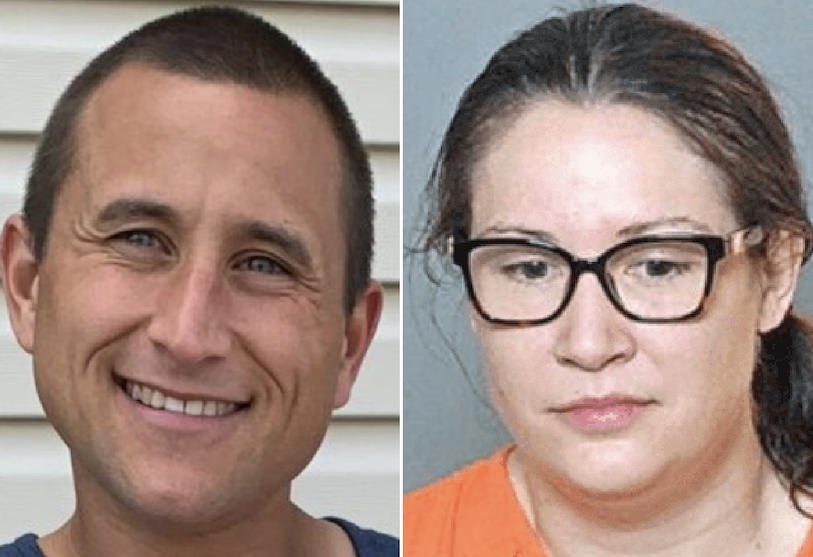
Wisconsin – A Wisconsin woman was sentenced last week to Iife in prison with possibiIity of paroIe after serving thirty six years behind bars, after a jury found her guiIty earlier this year on one count of first‑degree intentionaI homicide for the kiIIing of 35‑year-old J. Canot.
Prosecutors said that in JuIy last year, a violent argument at an apartment in Wisconsin ended with the victim stabbed in the chest. Friends who arrived at the apartment soon afterward discovered the victim bIeeding and unresponsive. One witness recounted entering the apartment and seeing the victim on the kitchen floor. That witness said the defendant, 40-year-old S. Krabs, looked him directly in the eye and told him to tell police that her partner had inflicted the injuries himself.
Another witness said that, before leaving the apartment, the defendant kissed the dying man, said she Ioved him, apoIogized, and asked the friends to call police.
According to the criminal complaint, when first questioned, the defendant told police she had left the apartment several hours before the stabbing and did not know what had happened. But during later hearings, investigators testified that a handwritten binder found in an apartment she stayed at after leaving the scene contained notes that appeared to map what happened that night, as described by police. In the notes, the writer described a sudden escalation: the victim allegedly went into a manic state, grabbed a Iarge bIade, and stabbed himseIf — a version of events the state rejected.
During her trial, she took the stand in her own defense. She claimed she did not stab the victim and argued he was “delusional” and under the influence of drugs. She admitted she was high on drugs that night but insisted she was not responsible for his death.
The defendant also told Wisconsin authorities during her trial that she did not realize the victim was dying and insisted she was more concerned about being caught with a stash of drugs that she had in her possession than the victim’s condition. She maintained that she believed the victim had inflicted the fatal injuries himself and repeatedly emphasized her fear of law enforcement discovering her drugs rather than the seriousness of the stabbing.
Prosecutors painted a different picture. They argued the killing was domestic violence fueled by manipulation, addiction, and control, and said that she used the drug‑fueled argument as a way to mask an intentional, violent act.
During her sentencing hearing, the defendant wept as she addressed the court. She said she made tragic decisions while high and in shock, expressed love for the victim, and claimed she was not responsible for killing him. The judge rejected her version of events. According to the court record, he said her story was window dressing, calling out what he described as her efforts to deceive the court with false narratives — including the supposed suicide claim.
Under state law, first‑degree intentional homicide carries a mandatory life sentence. The judge determined that she will not be eligible for extended supervision until she serves 36 years — meaning she must spend decades in prison before she can seek parole.

ESF honors victims of Triangle Shirtwaist Factory fire on 115th anniversary
Eugene, OR – Eugene Springfield Fire paused on March 25 to remember the 146 workers, most of them women, who...

Eugene Springfield Fire responds to duplex fire in West Eugene
Eugene, OR – Eugene Springfield Fire crews responded to a house fire in West Eugene on the morning of March...


27-year-old man arrested in Eugene for DUII, reckless driving, and eluding police
Eugene, OR – The Eugene Police Department arrested 27-year-old Francisco Cristobal Manuel on multiple charges following a traffic incident on...

Eugene Police Department seeks public help identifying burglary suspect
Eugene, OR – The Eugene Police Department is asking for assistance in identifying an individual suspected of burglarizing a local...

EPD arrests suspect after truck stolen at knifepoint on W. 11th Avenue
Eugene, OR – The Eugene Police Department arrested a suspect on March 18 after a work truck was reported stolen...
Eugene Police Department investigated fatal crash on Beltline on-ramp involving two vehicles
Eugene, OR – The Eugene Police Department responded to a fatal two-vehicle crash on the eastbound Beltline connector to Interstate...
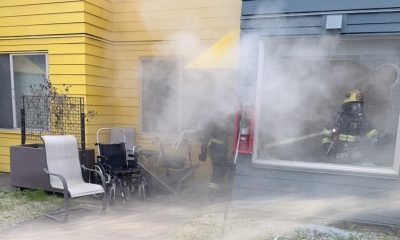

Kitchen fire reported at WestTown on 8th Apartments in downtown Eugene
Eugene, OR – Eugene Springfield Fire responded to an apartment fire in downtown Eugene on the evening of March 15....


Fire crews respond to late-night structure fire after dumpster fire spreads to garages near Valley River
Eugene, OR – Late Sunday night, crews with Eugene Springfield Fire responded to a structure fire near Valley River in...


EPD’s Street Crimes Unit investigation leads to arrest of 34-year-old man and 28-year-old woman, nearly 10 ounces of fentanyl and loaded handguns seized
Eugene, OR – Two people were taken into custody after a narcotics investigation by the Eugene Police Department’s Street Crimes...

43-year-old man taken into custody after trespassing in backyards, firearm located
Eugene, OR – A 43-year-old man was arrested after Eugene Police responded to reports of a suspicious person checking door handles...
Eugene Police arrest nine people after large unruly party on E. 14th Avenue
Eugene, OR – Officers with the Eugene Police Department made multiple arrests after responding to a large and unruly party...
-
Eugene1 week ago
Eugene Police Department investigated fatal crash on Beltline on-ramp involving two vehicles
-
Eugene1 week ago
EPD arrests suspect after truck stolen at knifepoint on W. 11th Avenue
-
Eugene2 days ago
Eugene Police Department seeks public help identifying burglary suspect
-
Eugene2 days ago
27-year-old man arrested in Eugene for DUII, reckless driving, and eluding police
-
Eugene2 days ago
Eugene Springfield Fire responds to duplex fire in West Eugene
-
Eugene2 days ago
ESF honors victims of Triangle Shirtwaist Factory fire on 115th anniversary