
Oregon
Oregon Democrats spark statewide political backlash after blaming Trump for gas price surge, as Republicans slam claims and accuse them of dodging responsibility amid rising fuel costs
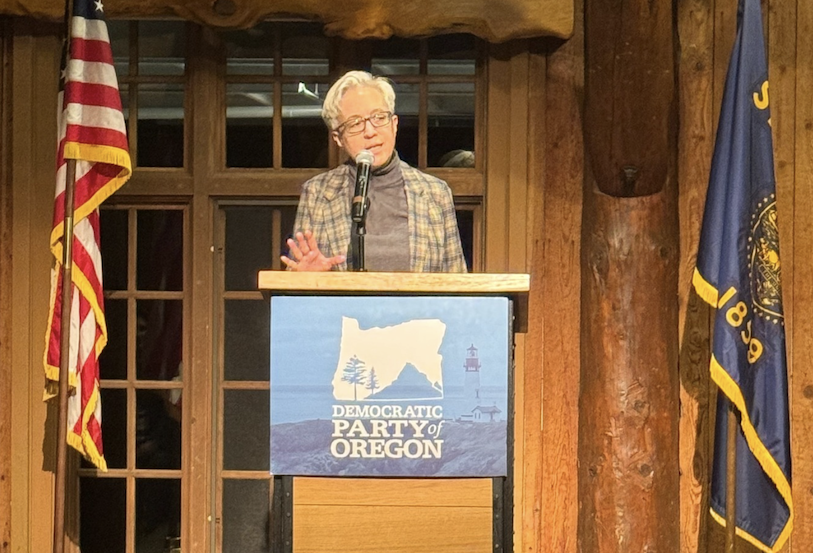
Oregon – A growing political debate in Oregon over rising fuel prices has drawn indirect references to former President Donald Trump’s foreign policy decisions, as Democratic officials and lawmakers point to global instability in the Middle East as a key driver of higher gasoline costs.
The discussion comes amid a broader national surge in fuel prices connected to the ongoing conflict involving Iran, which disrupted global oil supply routes and pushed U.S. gas prices above $4 per gallon in many regions. According to reporting from the Associated Press, Oregon Democrats have argued that the price increases are not solely domestic in origin, but are heavily influenced by international developments tied to the war in Iran and its political roots in earlier U.S. policy decisions, including actions taken during Trump’s presidency.
At the state level, Oregon officials, including Gov. Tina Kotek, have framed the issue as part of a broader affordability challenge facing households. Democrats have defended recent transportation and infrastructure funding measures, including a gas tax increase, arguing that stable road funding is necessary even during periods of economic pressure. However, critics have seized on the timing, saying that higher fuel costs make additional taxes harder to justify.
The political argument intensified as Oregon voters were set to weigh a referendum on whether to repeal the state’s gas tax increase. Republicans quickly gathered enough signatures to place the measure on the ballot, framing it as a direct response to rising household costs. Democrats, meanwhile, have emphasized long-term infrastructure needs while acknowledging that current fuel prices complicate their messaging.
In public statements reported by the Associated Press, Oregon Democrats pointed to the Iran conflict as a major factor behind the spike in gasoline prices. They argued that global energy disruption, including instability in key oil transport routes, has played a significant role in pushing prices higher across the United States. Some Democratic officials tied the origins of the conflict indirectly to earlier U.S. foreign policy decisions under former President Trump, particularly his administration’s approach to Iran and military engagement in the region.
The framing has become politically sensitive, as Republicans reject the idea that foreign policy decisions from previous administrations are responsible for current fuel costs. Instead, they argue that state-level taxation is exacerbating financial strain on consumers. The result has been a layered political dispute in Oregon that blends local tax policy with global geopolitical tensions.
National polling suggests that Americans are deeply divided on responsibility for rising gas prices. A Reuters/Ipsos survey found that a majority of respondents blame President Donald Trump’s handling of the Iran conflict and related economic consequences for increased fuel costs, while others attribute the spike to global market volatility and supply disruptions.
Other polling, including Quinnipiac University data, has similarly shown that most voters believe Trump-era foreign policy decisions have contributed to current instability in oil markets, though partisan divides remain sharp.
Energy analysts, however, caution that gasoline prices are typically influenced by a combination of factors, including global supply chains, refinery capacity, geopolitical risk, and seasonal demand. While the Iran conflict has been identified as a major contributor to recent volatility, economists stress that no single political figure or policy can fully explain price movements in isolation.
In Oregon, the intersection of these issues has created a politically charged environment heading into the referendum vote. Gov. Kotek and Democratic leaders continue to defend infrastructure funding plans as necessary for maintaining roads and transit systems, while also pointing to international instability as a driver of economic pressure beyond state control.
Republicans, on the other hand, have focused almost exclusively on the immediate burden facing drivers, arguing that any tax increase during a period of elevated fuel prices is unacceptable regardless of external causes.
As voters prepare to decide the fate of the gas tax measure, the debate illustrates how global conflicts, national political legacies, and local fiscal policy have become tightly intertwined in shaping public opinion on everyday costs like gasoline.

Oregon Sen. Merkley warns of “major danger for our Republic” as he accuses President Trump of seeking to block states from certifying election results after DOJ targets Alaska Senate race
Oregon – Sen. Jeff Merkley is warning that President Donald Trump could seek to prevent states from certifying election results...

Oregon Republican gubernatorial candidate Drazan takes aim at Gov. Kotek over $96,000 ODOT hiring contract, tells her to leave the hiring to her in January
Oregon – Oregon Republican gubernatorial candidate Christine Drazan is criticizing Gov. Tina Kotek over the state’s decision to spend $96,000...

Eugene firefighters battle four-hour blaze that engulfed large rural home as difficult access and lack of fire hydrants complicate response
Eugene, OR – Eugene Springfield Fire crews spent approximately four hours battling a fire that engulfed a large, two-story home...
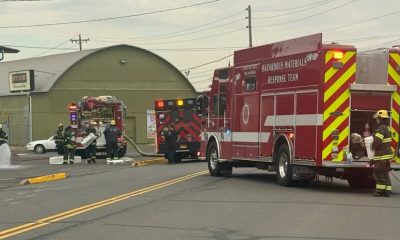

Eugene Springfield Fire responds to hazardous materials incident after chemical reaction overheats industrial equipment and releases gases
Eugene, OR – Eugene Springfield Fire crews responded to a hazardous materials incident at an industrial facility in West Eugene...


Eugene police invite families to free Halloween ‘Candy with a Cop’ event featuring trick-or-treating, police vehicles and first responders
Eugene, OR – The Eugene Police Department is inviting families to a free Halloween event on Sunday, Oct. 25, where...


33-year-old man arrested after ramming vehicles, punching officer in the face and slashing another with a knife
Eugene, OR – Eugene police arrested a 33-year-old man early Friday after he allegedly rammed parked vehicles, punched an officer...
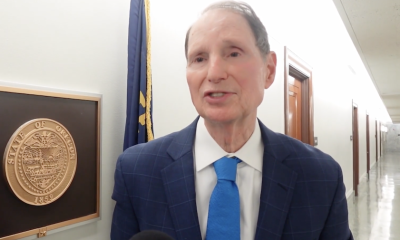

Oregon Sen. Wyden warns over Trump administration plan for migrant children, says HHS lawyers could represent kids facing deportation while working for the same government seeking to remove them
Oregon – Oregon Sen. Wyden urges Trump administration to reverse plan for HHS attorneys to represent unaccompanied migrant children, warning...
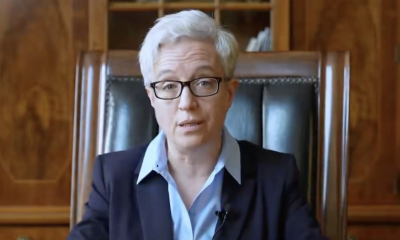

Gov. Kotek warns Oregonians their ballots could be delayed this November as she urges them to make sure their signatures are correct before mailing them
Oregon – Oregon Gov. Tina Kotek is urging voters to make sure their mail-in ballots are signed clearly before returning...


Large rural home destroyed in overnight fire near Eugene as firefighters battle flames for four hours
Eugene, OR – A large, two-story home was fully engulfed in flames when firefighters arrived at a rural property in...
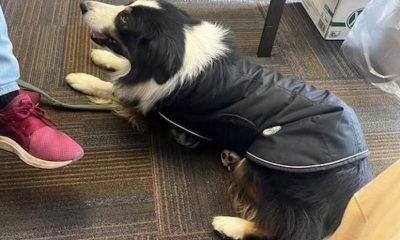

Eugene police investigate theft of elderly woman’s dog after group returns to take border collie while she was sleeping
Eugene, OR – The Eugene Police Department is investigating the theft of a companion animal after a 73-year-old woman reported...


Eugene man arrested on kidnapping warrant after refusing to stop for police and driving toward Walmart entrance during pursuit
Eugene, OR – The Eugene Police Department arrested a man wanted on a felony kidnapping warrant after he allegedly refused...
-
 Eugene6 days ago
Oregon Sen. Merkley warns “we can’t sleepwalk into a decision this consequential” as Senate gets chance to act “before it’s too late” over Trump’s Saudi nuclear deal that could trigger arms race
-
 Oregon6 days ago
“No company should be able to target you using your personal data,” Oregon Sen. Wyden urges Congress to pass his bill banning surveillance ads and targeted advertising by chatbots
-
Eugene3 days ago
Gov. Kotek warns Oregonians their ballots could be delayed this November as she urges them to make sure their signatures are correct before mailing them
-
 Eugene6 days ago
44-year-old man arrested after allegedly striking contractor in the head with skateboard and attacking another with wooden stick
-
Eugene3 days ago
Large rural home destroyed in overnight fire near Eugene as firefighters battle flames for four hours
-

 Eugene6 days ago
Eugene considers new micro village housing rules to expand affordable housing options as City Council schedules public hearing
-
Eugene3 days ago
Eugene police investigate theft of elderly woman’s dog after group returns to take border collie while she was sleeping
-
Eugene3 days ago
Oregon Sen. Wyden warns over Trump administration plan for migrant children, says HHS lawyers could represent kids facing deportation while working for the same government seeking to remove them