
Oregon
“President Trump’s chaotic tariff taxes are hitting Oregon hard,” Gov. Kotek says as latest analysis reveals tariffs are costing the state an estimated $442 million in revenue

Oregon – “President Trump’s chaotic tariff taxes are hitting Oregon hard,” Gov. Tina Kotek said, pointing to new state analysis showing Oregon exports declined 17% and estimating that the state lost $442 million in revenue.
Kotek discussed the economic impact of tariffs during a recent interview, arguing that Oregon has been particularly exposed because of its reliance on international trade. The state’s 2026 Tariff Impact Analysis was prepared by the Office of Economic Analysis, Oregon Employment Department and Business Oregon.
The report found that Oregon importers paid nearly $3 billion in tariffs between March and December 2025. State economists estimated that the tariff-related decline in economic activity contributed to a $442 million reduction in revenue during the 2025-27 budget cycle.
Kotek said Oregon’s economy is especially connected to international markets because the state both imports materials used by businesses and exports products to customers around the world.
“We make things, we grow things, and the world wants them,” Kotek said during the interview, describing Oregon as a highly trade-dependent state.
The governor said the effects of tariffs are being felt by businesses as well as consumers because companies that rely on imported materials can face higher costs. She pointed to Bob’s Red Mill as an example, saying the Oregon company relies on quinoa that is not grown in the United States.
According to Kotek, tariff increases can therefore raise production costs even when the finished product is made in Oregon.
The state analysis found that exports fell by 17%, while imports initially increased as businesses rushed to bring goods into the country before additional tariffs took effect. Oregon’s effective tariff rate increased from roughly 2% in March 2025 to about 15% by the fall, according to the governor’s office.
Oregon Capital Chronicle reported that the tariffs contributed to reductions in consumer demand, business profitability and labor income, all of which affected sources of state revenue. The report also found that the state experienced a sharper slowdown than other states with similar exposure to international trade.
Oregon’s economy did not enter the period in perfect condition, however. State economists said tariffs were not the original cause of Oregon’s economic slowdown, but they exacerbated existing problems.
Kotek also cited uncertainty as one of the biggest problems created by changing tariff rates.
She said businesses need to know what their costs will be in order to make decisions about hiring, investment, production and expansion. Constant changes in trade policy can make those decisions more difficult.
The effects have also varied across industries. Seafood processors along Oregon’s southern coast told Oregon Public Broadcasting that tariffs have created concerns about foreign markets, although some businesses have been dealing with tariffs for years and are not affected equally.
Kotek said Oregon is attempting to respond through both legal action and state assistance for businesses.
Oregon Attorney General Dan Rayfield has led multiple multistate lawsuits challenging the Trump administration’s tariffs. In August, Oregon joined 24 other states in another lawsuit challenging a new round of tariffs covering more than 80 countries.
Kotek highlighted Rayfield’s role in the state’s legal response, saying Oregon had already won an earlier tariff case and would continue fighting the administration in court.
The governor also said Oregon has created a program to provide technical assistance to small businesses affected by tariff uncertainty.
“We have to keep fighting back, supporting our businesses,” Kotek said.
The state’s analysis has become part of a broader political dispute over the economic consequences of the Trump administration’s trade policies. Trump has defended tariffs as a way to encourage domestic manufacturing, generate government revenue and change the terms of international trade, while Kotek and other Democratic governors have argued that the policies raise costs and create uncertainty for businesses and consumers.
Oregon’s report also found that the expected benefits of bringing supply chains back to the United States and increasing related employment had not yet appeared in measurable terms, according to Oregon Chief Economist Carl Riccadonna.
For Kotek, the latest numbers reinforce her argument that Oregon’s dependence on global trade makes the state particularly vulnerable to abrupt changes in federal trade policy.
The governor said the state will continue working with businesses, pursuing legal challenges and providing assistance as Oregon responds to the effects of the tariffs.

Oregon Sen. Merkley warns of “major danger for our Republic” as he accuses President Trump of seeking to block states from certifying election results after DOJ targets Alaska Senate race
Oregon – Sen. Jeff Merkley is warning that President Donald Trump could seek to prevent states from certifying election results...


Oregon Republican gubernatorial candidate Drazan takes aim at Gov. Kotek over $96,000 ODOT hiring contract, tells her to leave the hiring to her in January
Oregon – Oregon Republican gubernatorial candidate Christine Drazan is criticizing Gov. Tina Kotek over the state’s decision to spend $96,000...


Eugene firefighters battle four-hour blaze that engulfed large rural home as difficult access and lack of fire hydrants complicate response
Eugene, OR – Eugene Springfield Fire crews spent approximately four hours battling a fire that engulfed a large, two-story home...


Eugene Springfield Fire responds to hazardous materials incident after chemical reaction overheats industrial equipment and releases gases
Eugene, OR – Eugene Springfield Fire crews responded to a hazardous materials incident at an industrial facility in West Eugene...


Eugene police invite families to free Halloween ‘Candy with a Cop’ event featuring trick-or-treating, police vehicles and first responders
Eugene, OR – The Eugene Police Department is inviting families to a free Halloween event on Sunday, Oct. 25, where...


33-year-old man arrested after ramming vehicles, punching officer in the face and slashing another with a knife
Eugene, OR – Eugene police arrested a 33-year-old man early Friday after he allegedly rammed parked vehicles, punched an officer...

Oregon Sen. Wyden warns over Trump administration plan for migrant children, says HHS lawyers could represent kids facing deportation while working for the same government seeking to remove them
Oregon – Oregon Sen. Wyden urges Trump administration to reverse plan for HHS attorneys to represent unaccompanied migrant children, warning...
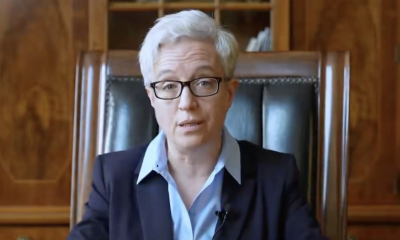

Gov. Kotek warns Oregonians their ballots could be delayed this November as she urges them to make sure their signatures are correct before mailing them
Oregon – Oregon Gov. Tina Kotek is urging voters to make sure their mail-in ballots are signed clearly before returning...


Large rural home destroyed in overnight fire near Eugene as firefighters battle flames for four hours
Eugene, OR – A large, two-story home was fully engulfed in flames when firefighters arrived at a rural property in...


Eugene police investigate theft of elderly woman’s dog after group returns to take border collie while she was sleeping
Eugene, OR – The Eugene Police Department is investigating the theft of a companion animal after a 73-year-old woman reported...


Eugene man arrested on kidnapping warrant after refusing to stop for police and driving toward Walmart entrance during pursuit
Eugene, OR – The Eugene Police Department arrested a man wanted on a felony kidnapping warrant after he allegedly refused...
-
 Eugene6 days ago
Oregon Sen. Merkley warns “we can’t sleepwalk into a decision this consequential” as Senate gets chance to act “before it’s too late” over Trump’s Saudi nuclear deal that could trigger arms race
-
 Oregon6 days ago
“No company should be able to target you using your personal data,” Oregon Sen. Wyden urges Congress to pass his bill banning surveillance ads and targeted advertising by chatbots
-
Eugene3 days ago
Gov. Kotek warns Oregonians their ballots could be delayed this November as she urges them to make sure their signatures are correct before mailing them
-
 Eugene6 days ago
44-year-old man arrested after allegedly striking contractor in the head with skateboard and attacking another with wooden stick
-
Eugene3 days ago
Large rural home destroyed in overnight fire near Eugene as firefighters battle flames for four hours
-

 Eugene6 days ago
Eugene considers new micro village housing rules to expand affordable housing options as City Council schedules public hearing
-
Eugene3 days ago
Eugene police investigate theft of elderly woman’s dog after group returns to take border collie while she was sleeping
-
Eugene3 days ago
Oregon Sen. Wyden warns over Trump administration plan for migrant children, says HHS lawyers could represent kids facing deportation while working for the same government seeking to remove them