
Oregon
Gov. Kotek responds after DOJ sues Oregon over in-state tuition for immigrants lacking legal status, says she will continue to stand up for their opportunity to pursue an education
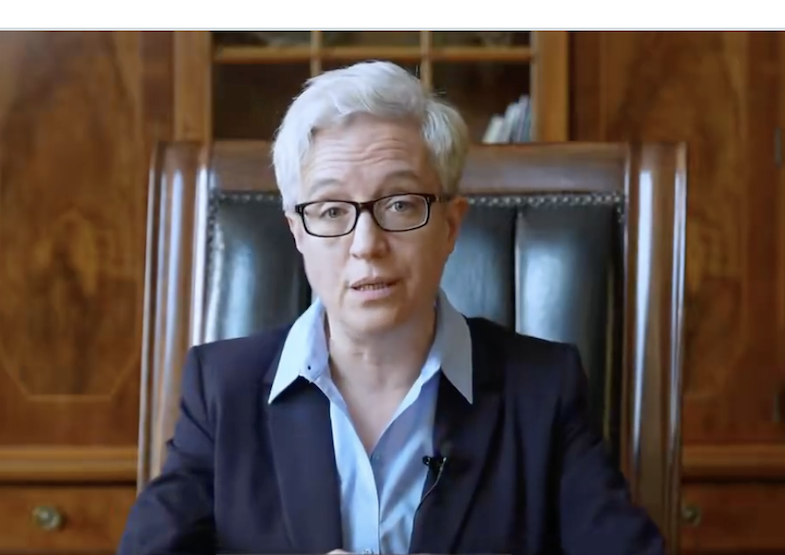
Oregon – “Young people who grow up in Oregon, go to Oregon schools, and graduate from Oregon high schools are part of our communities and part of our future,” Gov. Tina Kotek said as the state faced a new lawsuit from the U.S. Department of Justice challenging Oregon laws that allow certain students without legal immigration status to receive in-state tuition rates.
“I will continue to stand up for their opportunity to pursue an education and build a life here,” Kotek added in a statement following the federal action.
The Justice Department filed lawsuits Thursday against Oregon, Arizona, New Mexico and Washington, challenging state laws that allow certain noncitizen students to qualify for in-state tuition and, in some cases, state financial assistance. The latest lawsuits bring the Trump administration’s legal challenges over similar tuition policies to 21 states, according to the DOJ.
The federal government argued that the policies violate federal law by providing reduced tuition rates or other educational benefits to students who are not legally present in the United States while not making the same benefits available to U.S. citizens who live outside the states. The DOJ also argued that the policies create incentives for illegal immigration.
Oregon’s policy stems from the state’s Tuition Equity Act, a 2013 law that allows certain students who are Oregon residents but not U.S. citizens to qualify for resident tuition and fees at public universities. Eligibility is tied to requirements involving attendance at Oregon schools and graduation from an Oregon high school.
The lawsuit names the state as well as several public higher education institutions, including the University of Oregon, Oregon State University, Portland State University, Western Oregon University, Southern Oregon University and Portland Community College, KOIN reported.
Kotek defended the policy by emphasizing the connection between the students affected by the law and Oregon communities.
Her statement came as the administration of President Donald Trump continued a broader effort to challenge state tuition policies for undocumented students. According to Higher Ed Dive, the Justice Department had already filed similar lawsuits against 17 other states before adding Oregon, Arizona, New Mexico and Washington to the list. The federal government has also succeeded in knocking down five such policies, while other cases remain in litigation.
The dispute centers in part on a federal immigration law that restricts states from providing postsecondary education benefits based on state residency to people who are not U.S. citizens or nationals unless U.S. citizens are also eligible for those benefits regardless of their residency. The Justice Department has argued that the state tuition programs conflict with that requirement.
The financial difference between resident and nonresident tuition can be substantial. Higher Ed Dive reported that the University of Oregon lists 2026-27 undergraduate tuition and fees at $17,475 for in-state students, compared with $47,466 for out-of-state students.
That difference is central to the larger debate over state tuition policies, with supporters arguing that students who have grown up and attended school in a state should not be treated as out-of-state students when pursuing higher education. Opponents, including the federal government, argue that states should not provide benefits based on residency to people who lack lawful immigration status when comparable benefits are not available to citizens living elsewhere.
The Justice Department said its latest lawsuits challenge a total of 21 in-state tuition and financial assistance laws across the four states. Associate Attorney General Stanley Woodward has indicated that the department intends to continue pursuing similar cases.
The issue has also drawn criticism from education and immigration advocacy organizations. Higher Ed Dive reported that student advocates and educational access groups opposed the federal lawsuits, warning that eliminating the programs could disrupt students’ education and make it harder for states to develop their future workforce.
The federal lawsuit now puts Oregon’s decade-old tuition policy in court, setting up another legal dispute between the Trump administration and state officials over immigration policy, education and the limits of state authority.
For Kotek, however, the issue is also about the students who have spent their formative years in Oregon.
“Young people who grow up in Oregon, go to Oregon schools, and graduate from Oregon high schools are part of our communities and part of our future,” she said.
The case will determine whether Oregon can continue allowing eligible students without legal immigration status to receive the same resident tuition rates available to qualifying Oregon residents.

Oregon Sen. Jeff Merkley speaks out after Democrats block Republican stock trading bill, says ‘the bill Republicans are pushing is a sham’
Oregon – Sen. Jeff Merkley is calling for a complete ban on stock trading by members of Congress after the...


Senate candidate Drazan takes aim at Democrat opponent, says Gov. Kotek should ‘spend less time obsessing over Trump’ and more time fixing Oregon after heated debate
Oregon – Oregon state Sen. Christine Drazan is escalating her criticism of Gov. Tina Kotek, saying the Democratic governor should...

Elderly woman arrested for DUII after rear-ending vehicle, nearly crashing into victim again with little child in car before refusing to take a breath test
Eugene, OR – A 61-year-old Eugene grandmother was arrested for DUII Thursday evening after a crash and after police said...

Eugene man arrested after allegedly pistol-whipping unhoused man in the head, attacking another victim and leaving firearm in dumpster downtown
Eugene, OR – Eugene police arrested a 22-year-old man after he reportedly pistol-whipped an unhoused community member and was involved...


22-year-old woman arrested for DUII after driving over sidewalk, handing officer credit card instead of license and refusing to get into patrol car
Eugene, OR – A 22-year-old Eugene woman was arrested for DUII early Saturday morning after an officer reported seeing her...

Sen. Wyden calls out DOJ and FBI, says they ‘must hand over this information’ or Democrats will subpoena it while accusing President Trump of ‘hiding Epstein evidence to protect Wall Street banks’
Oregon – Oregon Sen. Ron Wyden is accusing the Trump administration of withholding evidence from the public as part of...


Eugene moves forward with 133 new downtown apartments at 1059 Willamette, including 68 affordable units and 10 reserved for domestic violence survivors
Eugene, OR – The City of Eugene and a development team led by deChase Miksis and Edlen & Company have...


Eugene police investigate drug operation after SWAT raid leads to seizure of half-pound of meth, firearms-related items and stolen property
Eugene, OR – The Eugene Police Street Crimes Unit investigated a drug operation in the 100 block of Briarcliff Drive after...


Eugene police investigate animal neglect after more than 100 pet rats found inside two vehicles with little food and water
Eugene, OR – Eugene police and animal welfare officials removed more than 100 pet rats from two vehicles in Eugene...
Eugene police arrest man for murder of his wife after homicide investigation on Fox Hollow Road
Eugene, OR – The Eugene Police Department arrested Gregory Allen Pitts, 55, for the murder of his wife, Leanna Mae...


Sen. Wyden responds after digital extortion group breached FBI and stole data from employees, says ‘the FBI can’t even protect its own staff from being hacked’
Oregon – Oregon Sen. Ron Wyden is criticizing the FBI after the cybercriminal group ShinyHunters claimed it breached an FBI...
-
Eugene1 week ago
Sen. Wyden calls out DOJ and FBI, says they ‘must hand over this information’ or Democrats will subpoena it while accusing President Trump of ‘hiding Epstein evidence to protect Wall Street banks’
-
Eugene1 week ago
Eugene moves forward with 133 new downtown apartments at 1059 Willamette, including 68 affordable units and 10 reserved for domestic violence survivors
-
Eugene1 week ago
Eugene police investigate drug operation after SWAT raid leads to seizure of half-pound of meth, firearms-related items and stolen property
-
Eugene4 days ago
Senate candidate Drazan takes aim at Democrat opponent, says Gov. Kotek should ‘spend less time obsessing over Trump’ and more time fixing Oregon after heated debate
-
Eugene4 days ago
Oregon Sen. Jeff Merkley speaks out after Democrats block Republican stock trading bill, says ‘the bill Republicans are pushing is a sham’
-
Eugene4 days ago
Elderly woman arrested for DUII after rear-ending vehicle, nearly crashing into victim again with little child in car before refusing to take a breath test
-
Eugene1 week ago
Eugene police investigate animal neglect after more than 100 pet rats found inside two vehicles with little food and water
-
Eugene4 days ago
Eugene man arrested after allegedly pistol-whipping unhoused man in the head, attacking another victim and leaving firearm in dumpster downtown