
Oregon
Oregon Fish and Wildlife Commission adopts 2025 groundfish regulations

Eugene, OR – The Oregon Fish and Wildlife Commission adopted its 2025 recreational and commercial groundfish regulations during a meeting in Salem. The new regulations maintain a five-fish recreational bag limit during popular summer months, reflecting the commission’s efforts to balance conservation with access to fishing opportunities.
Nearshore groundfish species, such as rockfish, cabezon, greenlings, and lingcod, are jointly managed by state and federal authorities. The recent stock assessment for black rockfish and canary rockfish indicated a reduced quota for Oregon’s fisheries, prompting adjustments in the regulations.
Starting in January, the daily marine bag limit will be set at four fish, increasing to five on July 1, with a one-fish sub-bag limit for canary rockfish year-round. This phased approach aims to provide a stable fishery throughout the year, minimizing the risk of further bag limit reductions in-season. The higher bag limit during the summer months is designed to maximize opportunities for both residents and visitors who come to fish on the Oregon coast, where ocean conditions are typically more favorable.
The Oregon Department of Fish and Wildlife (ODFW) will continue efforts to gather more data on black rockfish, hoping to increase quota confidence and potentially expand recreational opportunities in the future. The 2025 quota reduction was less severe than anticipated, thanks to the ODFW’s data collection efforts.
In addition to groundfish regulations, the commission took several other actions today. It appointed Winter Rhodes as the new Public at Large Representative to the Fish Restoration and Enhancement Board, effective January 1, 2025. Updates were provided on the Restoration and Enhancement Program, which distributes grants for fishery restoration projects statewide, and on the STEP (Salmon Trout Enhancement) program, which runs hatcheries, educational events, and other outreach programs through a network of volunteers.
Funding was approved for Access and Habitat Project programs, including matching NRCS funds to continue the Open Fields program, which provides hunting access to private land. The Willamette Wildlife Mitigation Program was also advanced with the acquisition of three properties adjacent to the Fern Ridge Wildlife Area’s South Coyote Unit, funded by the Bonneville Power Administration to enhance local and regional conservation efforts.
Lastly, the commission approved additional funding for the Rogue Basin Partnership’s Bear Creek corridor project and updated mailing and reprinting fees to eliminate the standard $2 shipping fee for most documents. Preference point reinstatement was denied for an elk bow hunter who did not receive a preference point reinstatement after being injured, as he had already hunted during the season.
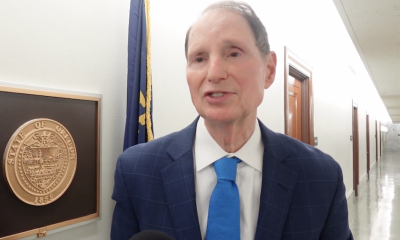

Oregon Sen. Wyden warns over Trump administration plan for migrant children, says HHS lawyers could represent kids facing deportation while working for the same government seeking to remove them
Oregon – Oregon Sen. Wyden urges Trump administration to reverse plan for HHS attorneys to represent unaccompanied migrant children, warning...


Gov. Kotek warns Oregonians their ballots could be delayed this November as she urges them to make sure their signatures are correct before mailing them
Oregon – Oregon Gov. Tina Kotek is urging voters to make sure their mail-in ballots are signed clearly before returning...


Large rural home destroyed in overnight fire near Eugene as firefighters battle flames for four hours
Eugene, OR – A large, two-story home was fully engulfed in flames when firefighters arrived at a rural property in...


Eugene police investigate theft of elderly woman’s dog after group returns to take border collie while she was sleeping
Eugene, OR – The Eugene Police Department is investigating the theft of a companion animal after a 73-year-old woman reported...


Eugene man arrested on kidnapping warrant after refusing to stop for police and driving toward Walmart entrance during pursuit
Eugene, OR – The Eugene Police Department arrested a man wanted on a felony kidnapping warrant after he allegedly refused...


Eugene police cite driver and pedestrian after crash on West 11th Avenue leaves man hospitalized with non-life-threatening injuries
Eugene, OR – The Eugene Police Department cited both a driver and a pedestrian following a vehicle-versus-pedestrian crash early Tuesday...


“No company should be able to target you using your personal data,” Oregon Sen. Wyden urges Congress to pass his bill banning surveillance ads and targeted advertising by chatbots
Oregon – “No company should be able to target you using your personal data, including the sensitive data people share...


Oregon Sen. Merkley warns “we can’t sleepwalk into a decision this consequential” as Senate gets chance to act “before it’s too late” over Trump’s Saudi nuclear deal that could trigger arms race
Oregon – “I refuse to let the U.S. sleepwalk into a dangerous nuclear deal with Saudi Arabia. The law gives...


Eugene considers new micro village housing rules to expand affordable housing options as City Council schedules public hearing
Eugene, OR – The City of Eugene is considering a new type of housing development that would allow small residential...


Eugene Springfield Fire thanks local businesses for helping families learn about battery safety and proper disposal
Eugene, OR – Eugene Springfield Fire is thanking Jerry’s Home Improvement and Waste Wise Lane County for helping share battery...

44-year-old man arrested after allegedly striking contractor in the head with skateboard and attacking another with wooden stick
Eugene, OR – A 44-year-old man was arrested after a contractor was struck in the head with a skateboard and...
-
Eugene4 days ago
Oregon Sen. Merkley warns “we can’t sleepwalk into a decision this consequential” as Senate gets chance to act “before it’s too late” over Trump’s Saudi nuclear deal that could trigger arms race
-
Oregon4 days ago
“No company should be able to target you using your personal data,” Oregon Sen. Wyden urges Congress to pass his bill banning surveillance ads and targeted advertising by chatbots
-
Eugene4 days ago
44-year-old man arrested after allegedly striking contractor in the head with skateboard and attacking another with wooden stick
-
Eugene4 days ago
Eugene considers new micro village housing rules to expand affordable housing options as City Council schedules public hearing
-
Eugene4 days ago
Eugene man arrested for DUII after police find gun with scratched-off serial number in BMW parked in middle of road
-
Eugene19 hours ago
Gov. Kotek warns Oregonians their ballots could be delayed this November as she urges them to make sure their signatures are correct before mailing them
-
Eugene4 days ago
Eugene Springfield Fire thanks local businesses for helping families learn about battery safety and proper disposal
-
Eugene19 hours ago
Oregon Sen. Wyden warns over Trump administration plan for migrant children, says HHS lawyers could represent kids facing deportation while working for the same government seeking to remove them