
Oregon
Gov. Tina Kotek reflects on court victory earlier this year, says Trump had “no justification” to deploy National Guard troops in Oregon
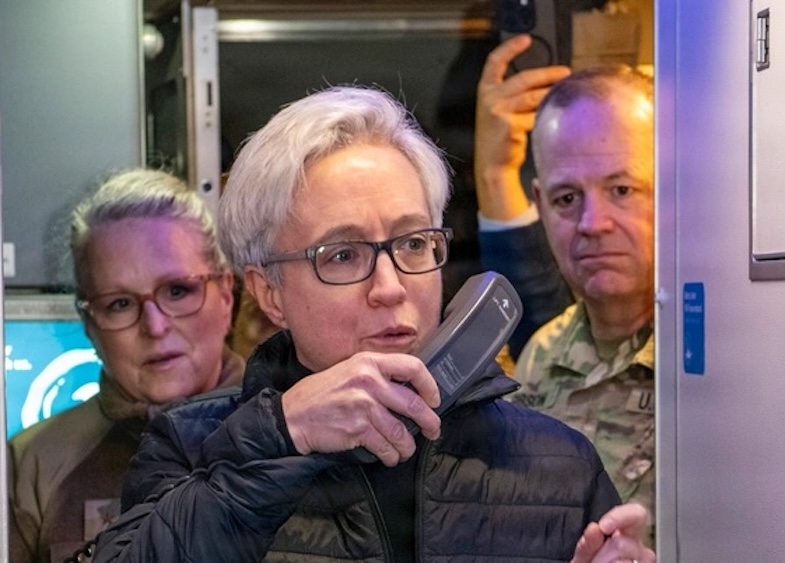
Oregon – Gov. Tina Kotek is highlighting what she describes as a major victory for Oregon after federal courts blocked President Donald Trump’s effort to deploy Oregon National Guard troops to Portland, a legal battle that drew national attention and raised questions about presidential authority, state sovereignty, and the use of military forces in American cities.
“Trump called Portland ‘war-ravaged’ and tried to deploy 200 Oregon National Guard troops against Oregonians,” Kotek wrote in a June 9 social media post. “The court found there was no rebellion and no justification. We won that fight, and as your governor, I will always fight for you. We are peaceful & united. We are Oregon.”
In a separate post, Kotek emphasized that the legal challenge ultimately resulted in the deployment being permanently blocked.
“When President Trump tried to deploy the Oregon National Guard against our own communities, we went to court and won,” she wrote. “The courts permanently blocked Trump’s unlawful deployment, and every member of the Oregon National Guard got to go home. That’s what it means to fight for Oregon.”
The dispute began in September 2025 when the Trump administration ordered 200 members of the Oregon National Guard into federal service for a planned deployment to Portland. Federal officials argued the action was necessary to protect federal facilities and personnel amid ongoing protests related to immigration enforcement policies.
Oregon officials strongly disagreed. Kotek, joined by Oregon Attorney General Dan Rayfield and local leaders, filed a lawsuit challenging the deployment. State officials argued there was no rebellion, insurrection, or public safety emergency that justified federal intervention and accused the administration of exaggerating conditions in Portland.
At the center of the case was President Trump’s assertion that Portland had become a “war-ravaged” city and that federal action was necessary to restore order. Oregon leaders countered that characterization, maintaining that local and state law enforcement agencies were fully capable of handling public safety concerns without military involvement.
The legal battle moved quickly through federal courts. Temporary restraining orders initially blocked the deployment while litigation continued. Although appellate court rulings created periods of uncertainty over federal control of the Guard, courts repeatedly prevented the troops from being deployed into Portland while the case proceeded.
A major turning point came in November 2025, when U.S. District Judge Karin Immergut issued a permanent injunction blocking the deployment. The court found that the administration lacked sufficient justification under federal law to federalize and deploy the troops, concluding there was no rebellion or comparable threat that would authorize such action.
The ruling was particularly notable because Immergut was appointed to the federal bench by Trump during his first term. The judge determined that the legal standard required to justify the deployment had not been met and permanently barred the action under the circumstances presented by the administration.
The case continued through the appeals process for several months. However, in early 2026, the Trump administration moved to drop its appeal, leaving the permanent injunction in place. Shortly afterward, remaining federalized Oregon National Guard members were demobilized and returned to state control.
The dispute became one of the most significant legal confrontations between Oregon and the federal government during Trump’s current term, drawing attention from constitutional scholars, state officials, and civil liberties advocates across the country. Supporters of the lawsuit argued it reinforced limits on federal authority and protected states from what they viewed as unnecessary military intervention. Opponents maintained that the federal government has a responsibility to protect federal facilities and personnel when threats arise.
For Kotek, the outcome remains a defining example of her administration’s approach to defending Oregon’s authority and resisting actions she believes exceed federal power.
Nearly a year after the deployment order was issued, the governor continues to point to the court victory as evidence that Oregon successfully challenged what she viewed as an unlawful attempt to use National Guard troops against local communities.

Oregon Sen. Jeff Merkley speaks out after Democrats block Republican stock trading bill, says ‘the bill Republicans are pushing is a sham’
Oregon – Sen. Jeff Merkley is calling for a complete ban on stock trading by members of Congress after the...


Senate candidate Drazan takes aim at Democrat opponent, says Gov. Kotek should ‘spend less time obsessing over Trump’ and more time fixing Oregon after heated debate
Oregon – Oregon state Sen. Christine Drazan is escalating her criticism of Gov. Tina Kotek, saying the Democratic governor should...

Elderly woman arrested for DUII after rear-ending vehicle, nearly crashing into victim again with little child in car before refusing to take a breath test
Eugene, OR – A 61-year-old Eugene grandmother was arrested for DUII Thursday evening after a crash and after police said...

Eugene man arrested after allegedly pistol-whipping unhoused man in the head, attacking another victim and leaving firearm in dumpster downtown
Eugene, OR – Eugene police arrested a 22-year-old man after he reportedly pistol-whipped an unhoused community member and was involved...


22-year-old woman arrested for DUII after driving over sidewalk, handing officer credit card instead of license and refusing to get into patrol car
Eugene, OR – A 22-year-old Eugene woman was arrested for DUII early Saturday morning after an officer reported seeing her...

Sen. Wyden calls out DOJ and FBI, says they ‘must hand over this information’ or Democrats will subpoena it while accusing President Trump of ‘hiding Epstein evidence to protect Wall Street banks’
Oregon – Oregon Sen. Ron Wyden is accusing the Trump administration of withholding evidence from the public as part of...


Eugene moves forward with 133 new downtown apartments at 1059 Willamette, including 68 affordable units and 10 reserved for domestic violence survivors
Eugene, OR – The City of Eugene and a development team led by deChase Miksis and Edlen & Company have...


Eugene police investigate drug operation after SWAT raid leads to seizure of half-pound of meth, firearms-related items and stolen property
Eugene, OR – The Eugene Police Street Crimes Unit investigated a drug operation in the 100 block of Briarcliff Drive after...


Eugene police investigate animal neglect after more than 100 pet rats found inside two vehicles with little food and water
Eugene, OR – Eugene police and animal welfare officials removed more than 100 pet rats from two vehicles in Eugene...
Eugene police arrest man for murder of his wife after homicide investigation on Fox Hollow Road
Eugene, OR – The Eugene Police Department arrested Gregory Allen Pitts, 55, for the murder of his wife, Leanna Mae...


Sen. Wyden responds after digital extortion group breached FBI and stole data from employees, says ‘the FBI can’t even protect its own staff from being hacked’
Oregon – Oregon Sen. Ron Wyden is criticizing the FBI after the cybercriminal group ShinyHunters claimed it breached an FBI...
-
Eugene1 week ago
Sen. Wyden calls out DOJ and FBI, says they ‘must hand over this information’ or Democrats will subpoena it while accusing President Trump of ‘hiding Epstein evidence to protect Wall Street banks’
-
Eugene1 week ago
Eugene moves forward with 133 new downtown apartments at 1059 Willamette, including 68 affordable units and 10 reserved for domestic violence survivors
-
Eugene1 week ago
Eugene police investigate drug operation after SWAT raid leads to seizure of half-pound of meth, firearms-related items and stolen property
-
Eugene4 days ago
Senate candidate Drazan takes aim at Democrat opponent, says Gov. Kotek should ‘spend less time obsessing over Trump’ and more time fixing Oregon after heated debate
-
Eugene4 days ago
Oregon Sen. Jeff Merkley speaks out after Democrats block Republican stock trading bill, says ‘the bill Republicans are pushing is a sham’
-
Eugene4 days ago
Elderly woman arrested for DUII after rear-ending vehicle, nearly crashing into victim again with little child in car before refusing to take a breath test
-
Eugene1 week ago
Eugene police investigate animal neglect after more than 100 pet rats found inside two vehicles with little food and water
-
Eugene4 days ago
Eugene man arrested after allegedly pistol-whipping unhoused man in the head, attacking another victim and leaving firearm in dumpster downtown