
Oregon
Oregon Sen. Wyden accuses President Trump of giving away public lands, claims “so his billionaire buddies can build more data centers that steal your water and drive up energy prices”
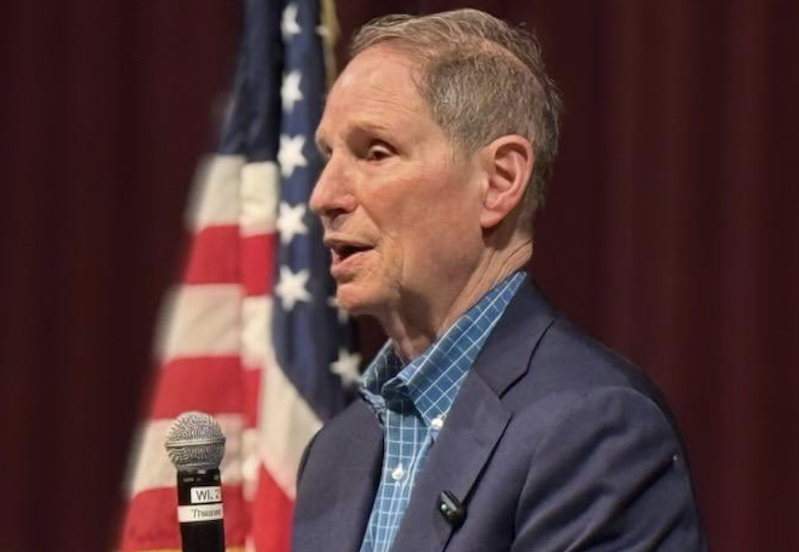
Oregon – “Trump is giving away your public lands in Oregon and the West. All so his billionaire buddies can build more DATA CENTERS that steal your water and drive up your energy prices,” Sen. Ron Wyden said Sept. 18, responding to new reporting that the Trump administration is considering a much larger number of data center projects on federal public lands than previously known.
Wyden’s comments came after The Washington Sun reported that the administration is considering at least 12 data center and related infrastructure proposals covering about 17,600 acres of federal public land across six Western states: Arizona, Idaho, Nevada, Oregon, Utah and Wyoming. The proposals were identified through Bureau of Land Management right-of-way records reviewed by the publication.
The projects are generally in early stages, and none of the proposals described in the report means a data center has been approved for construction. The BLM said each proposal would be evaluated under the National Environmental Policy Act process, including consideration of potential environmental impacts.
The reporting nevertheless drew attention because data centers have historically been built on private or other developed property, rather than federal public lands. The Washington Sun reported that building data centers on public lands has become a priority for the Trump administration, which directed BLM officials to identify federal lands that could be suitable for data center development.
Several of the proposals involve infrastructure needed to support large computing facilities, including roads, power facilities and water-related infrastructure. The projects vary significantly in size and stage of development.
In Idaho, for example, a proposal from Rhea Data, a subsidiary of Arevia Power, involves a roughly 4 million-square-foot, multi-building data center on about 3,226 acres of public land south of Boise. According to the BLM information cited by The Washington Sun, the project would include natural-gas power generation and electrical facilities connecting to Idaho Power.
Utah also emerged as a major part of the discussion. One proposal initially covered approximately 10,200 acres and involved nuclear power and a potential data center. However, after The Washington Sun published its report, Valar Atomics told the publication it had submitted an application for survey access but had decided not to pursue the project. That means the overall acreage reported in the initial story includes a proposal that was subsequently withdrawn.
Wyden has previously raised concerns about the amount of water and energy consumed by large data centers, particularly in Oregon. In April, he questioned executives from Google, Apple, Meta and Amazon about technologies designed to reduce groundwater withdrawals and other effects on local water supplies. Wyden cited estimates that large data centers can consume millions of gallons of water per day for cooling and said Oregon communities were concerned about potential effects on water availability as the state deals with drought.
His latest criticism therefore comes amid a broader national debate over how the rapid expansion of artificial intelligence infrastructure should affect electricity systems, water supplies and land use.
The issue has also become increasingly tied to electricity prices. President Trump said Sept. 18 that he was discussing legislation with Senate Majority Leader John Thune aimed at protecting households from higher electricity costs associated with the growing energy demands of data centers. The House had previously passed the Ratepayer Protection Act by a 417-3 vote, while an effort to quickly advance the measure in the Senate was blocked by Democratic Sen. Martin Heinrich, according to Reuters.
Trump has continued to promote data center construction as important to U.S. leadership in artificial intelligence. At the same time, lawmakers from both parties have raised concerns about whether households should bear the cost of the additional electricity infrastructure needed to serve large facilities.
Wyden’s Sept. 18 post focused specifically on federal public lands in Oregon and across the West. His claim that the projects would “steal your water” and “drive up your energy prices” reflects his criticism of the potential impacts rather than a finding that the proposed facilities would necessarily cause those outcomes.
The Washington Sun reported that local officials and advocates in several of the states with proposed projects said they had not previously been aware of many of the proposals. The report also said the projects were not easily accessible through the BLM’s public website because many remain at an early stage.
As the Trump administration considers how federal lands could be used for the rapidly expanding data center industry, the proposals are likely to face continued scrutiny over land use, environmental review, water consumption, electricity demand and the role of local communities in decisions involving public property.


Oregon Sen. Wyden accuses President Trump of giving away public lands, claims “so his billionaire buddies can build more data centers that steal your water and drive up energy prices”
Oregon – “Trump is giving away your public lands in Oregon and the West. All so his billionaire buddies can...


Sen. Merkley responds to Supreme Court ruling, warns “it’s just plain scary” after three justices express support for administration’s position on new USPS restrictions for mail-in ballots
Oregon – “Big news from the Supreme Court. Our work continues to protect vote by mail,” Sen. Jeff Merkley said...

Oregon Gov. Kotek draws response from opponent as Republican candidate claims the governor “declined to participate in debate” while accusing her of avoiding a live audience
Oregon – “But YOU declined the debate,” Republican Oregon gubernatorial candidate Christine Drazan said in response to Gov. Tina Kotek...


Structure fire breaks out in Eugene multi-unit residence as crews find flames in first-floor kitchen
Eugene, OR – Eugene Springfield Fire crews responded to a structure fire Sunday morning at a multi-unit residential building in...


Eugene police arrest 47-year-old man months after hit-and-run seriously injured bicyclist, truck owner allegedly reported vehicle stolen to police
Eugene, OR – Eugene police arrested a 47-year-old man Monday in connection with a July hit-and-run crash that seriously injured...


Woman arrested after police say she sat in the middle of the road and attempted to roll in front of a moving vehicle in Eugene
Eugene, OR – Eugene police arrested a 39-year-old woman after she was found sitting in the roadway and allegedly attempted...


34-year-old man charged with assault after two people struck in head with sharpened sticks on Highway 99N
Eugene, OR – Eugene police arrested a 34-year-old man after two people were struck in the head with large sticks...


Oregon Gov. Kotek speaks out after federal judge extended legal block against Postal Service, says President Trump ‘has to follow the law, just like everybody else’
Oregon – “President Trump and the U.S. Postal Service have to follow the law—just like everybody else. This fight is...
Oregon Sen. Merkley takes aim at President Trump after announcement of massive 250-foot arch, accuses him of spending Americans’ tax dollars on a monument to his ego
Oregon – Sen. Jeff Merkley criticized President Donald Trump after the administration announced plans to begin excavation work for a...

Oregon Sen. Wyden says ‘Trump’s obsession with deporting law-abiding students doesn’t make any of us safer’ following death of immigrant in what his family believes was a suicide
Oregon – Ron Wyden is calling for permanent legal protections for immigrants after the death of a 20-year-old Haitian college...

Eugene police rescue 15-year-old after woman allegedly takes teen, leads officers on high-speed chase across Oregon before being arrested in The Dalles
Eugene, OR – Eugene police rescued a 15-year-old teenager after a woman was arrested following a high-speed pursuit that stretched...
-
Eugene1 hour ago
Oregon Gov. Kotek draws response from opponent as Republican candidate claims the governor “declined to participate in debate” while accusing her of avoiding a live audience
-
Eugene2 hours ago
34-year-old man charged with assault after two people struck in head with sharpened sticks on Highway 99N
-
Eugene2 hours ago
Woman arrested after police say she sat in the middle of the road and attempted to roll in front of a moving vehicle in Eugene
-
Eugene1 hour ago
Sen. Merkley responds to Supreme Court ruling, warns “it’s just plain scary” after three justices express support for administration’s position on new USPS restrictions for mail-in ballots
-
Eugene2 hours ago
Eugene police arrest 47-year-old man months after hit-and-run seriously injured bicyclist, truck owner allegedly reported vehicle stolen to police
-
Eugene2 hours ago
Structure fire breaks out in Eugene multi-unit residence as crews find flames in first-floor kitchen